
Connected, Consumed, Controlled: How Social Media Rewrites the Human Mind.
Attention, Identity, and Power in the Age of the Algorithm

Introduction: The Illusion of Connection.
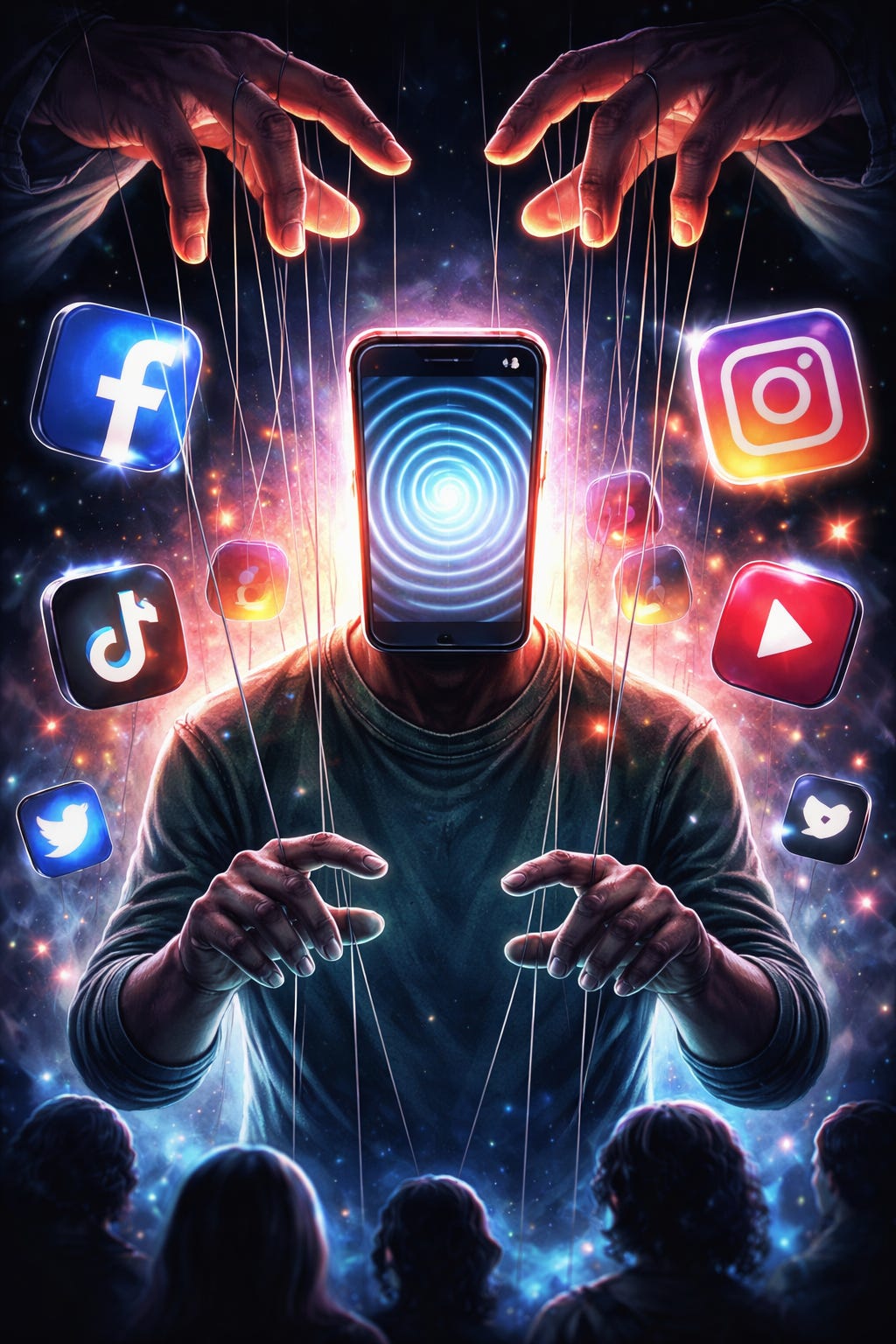
We have never been more connected—and yet, never more divided. Platforms like Facebook, X (formerly Twitter), Instagram, and TikTok promised to bring the world closer. Instead, they have quietly reshaped how we think, feel, communicate, and even disagree. What began as tools for expression have evolved into powerful systems of influence—subtle, addictive, and deeply controversial.
Social media is no longer just a mirror of society. It is a force that actively molds it.
The Architecture of Attention.
At the heart of every major social media platform lies the same objective: capture and retain attention. Algorithms are not neutral. They are engineered to prioritize content that provokes emotion—anger, fear, desire, outrage—because emotion keeps us scrolling.
Facebook amplifies engagement through controversy.
X rewards immediacy and conflict.
Instagram aestheticizes reality.
TikTok fragments thought into hyper-short dopamine loops.
The result? A culture of constant stimulation and shrinking attention spans, where depth is sacrificed for virality.
Identity in the Age of Performance.
Social media encourages us not just to live—but to perform our lives. Filters, metrics, likes, and followers subtly push users to curate identities that are appealing rather than authentic.
Over time, this creates:
Anxiety tied to validation.
Comparison-driven self-worth.
A blurred line between who we are and who we display.
We become both the product and the consumer, branding ourselves in a digital marketplace.
Truth, Misinformation, and Algorithmic Power.
Perhaps the most dangerous controversy lies in how social media handles truth. False information spreads faster than facts—not because people prefer lies, but because algorithms favor what spreads, not what’s accurate.
This has real-world consequences:
Political polarization.
Erosion of trust in institutions.
Radicalization through echo chambers.
When algorithms decide what we see, they also decide what we believe is real.
Resistance, Responsibility, and Digital Awareness.
Yet, social media is not inherently evil. It has empowered marginalized voices, fueled social movements, and democratized information. The problem is not the tool—it’s the uncritical use of it.
The path forward demands:
Digital literacy, not digital abstinence.
Platform accountability, not blind trust.
Conscious consumption, not endless scrolling.
Reclaiming agency in the digital age begins with awareness.
Conclusion: Choosing How We Connect.
Social media will continue to evolve. The real question is whether we will evolve with intention—or be shaped without consent.
In a world where attention is currency, choosing how we engage online becomes an act of resistance. Connection should expand our humanity, not compress it into algorithms.