
The Unseen Morocco: Where Silence, Symbols, and Soul Shape a Culture.
Language, Gesture, and the Hidden Grammar of Moroccan Life

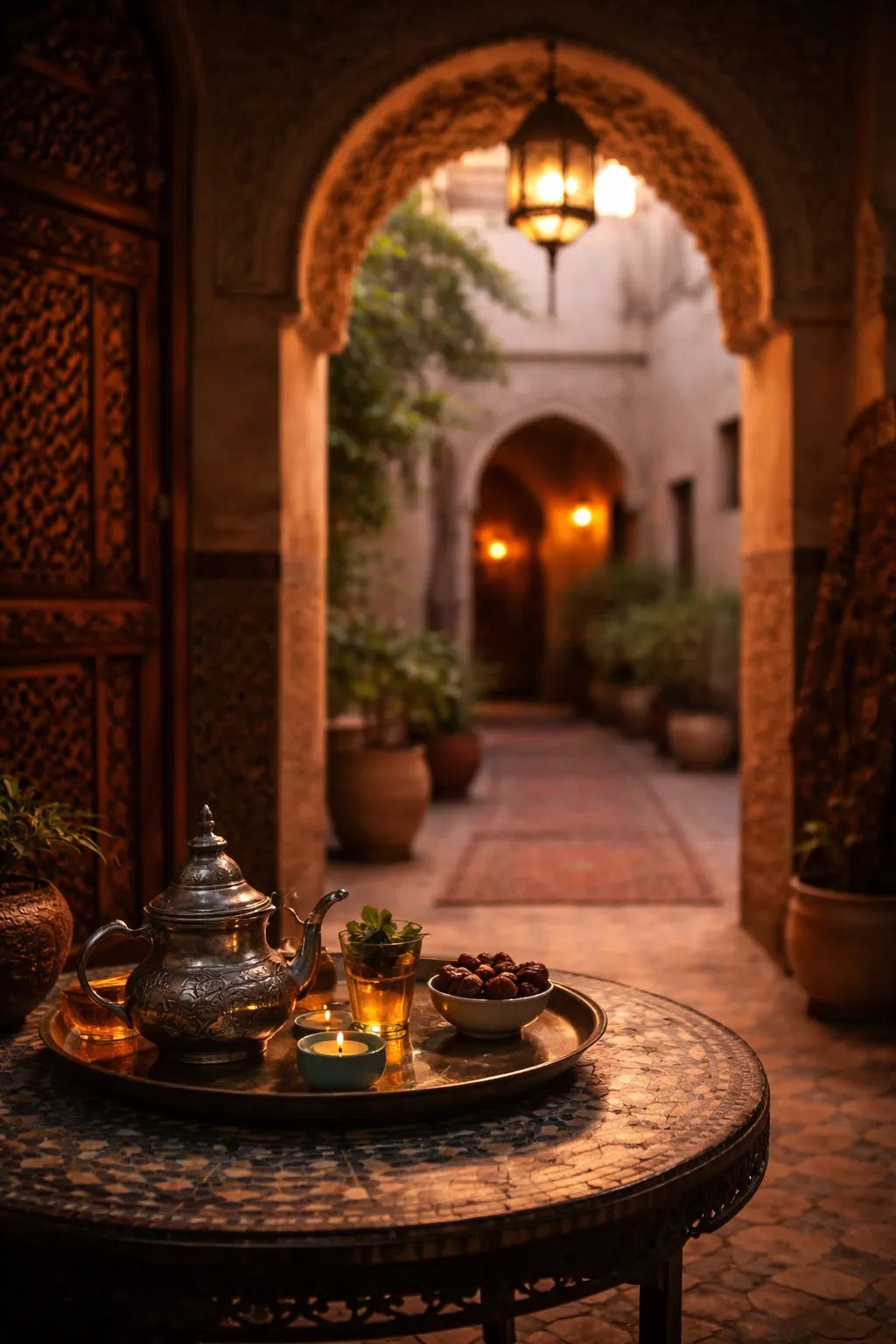
Morocco is often described through what can be seen: vibrant souks, ornate zellige, fragrant tagines, and golden desert dunes. Travelers photograph colors, sounds, and movement—and they are right to do so. Morocco is visually intoxicating.
But what if the most important part of Moroccan culture is not visible at all?
Beneath the spectacle lies a hidden dimension—a quiet architecture of values, unspoken rules, shared silences, and symbolic gestures that shape everyday life far more than monuments ever could. To truly understand Morocco, one must learn to read what is not said, what is implied, and what is felt.
This is the Morocco that rarely appears in guidebooks.
1. The Language Beyond Words.
Moroccans speak many languages—Darija, Amazigh, Classical Arabic, French, Spanish, and English—but communication goes far beyond vocabulary.
A pause can speak louder than a sentence.
A smile may replace a refusal.
A vague “inshallah” can mean hope, politeness, uncertainty—or a gentle no.
This indirectness is not confusion; it is cultural intelligence. It protects relationships. It avoids confrontation. Harmony often matters more than clarity.
To outsiders, this can feel elusive. To Moroccans, it is a refined social art: saying less to mean more.
2. Hospitality as a Moral Code.
Hospitality in Morocco is not a habit—it is an ethical obligation.
When a guest enters a home, they are not simply welcomed; they are honored. Food appears even when resources are limited. Tea is poured again and again, not because of thirst, but because generosity must be visible.
Refusing hospitality too quickly can feel impolite. Accepting it creates a temporary bond, a silent agreement of mutual respect.
What’s hidden here is not the meal but the belief behind it:
A person is measured by how they treat others when no one is watching.
3. Time That Breathes.
Moroccan time is not mechanical—it is human.
Schedules exist, but relationships take precedence. A conversation may delay an appointment. A family matter may reshape an entire day. This is often misunderstood as inefficiency, yet it reflects a deeper philosophy: life cannot be rushed without losing its meaning.
Time in Morocco stretches, bends, and waits. It breathes.
To live here is to learn patience—not as weakness, but as wisdom.
4. Sacred and Everyday, Intertwined.
In Morocco, spirituality is not confined to mosques or holy days. It flows quietly through daily life.
A phrase thanking God slips naturally into casual speech. Blessings are exchanged for small acts. Respect for elders carries spiritual weight. Even craftsmanship—woodwork, weaving, calligraphy—is often performed with intention, not just skill.
The sacred is not separated from the ordinary. It lives inside it.
This fusion creates a worldview where meaning is layered, not isolated.
5. Community Over Individualism.
Moroccan identity is deeply relational. People are introduced not only by name but also by family, city, or lineage. Decisions are often collective. Reputation extends beyond the individual.
Privacy exists—but so does responsibility to others.
The hidden dimension here is subtle: you are never entirely alone, even when you want to be. Support and expectation walk hand in hand.
This can feel heavy at times. But it also creates resilience—especially in moments of hardship.
6. Silence, Modesty, and Inner Strength.
One of the least visible traits in Moroccan culture is emotional restraint.
Pain is not always verbalized. Pride discourages complaint. Strength is shown through endurance rather than expression. This is particularly evident among older generations, whose lives were shaped by scarcity and struggle.
Behind quiet faces often lies profound depth.
Understanding this requires slowing down, listening carefully, and accepting that not everything needs explanation.
Why the Hidden Dimension Matters.
To experience Morocco only through what is visible is to admire a façade—beautiful, but incomplete.
The hidden dimension teaches us:
That communication can be gentle instead of direct.
That generosity can be instinctive.
That time can serve people, not control them.
That culture lives in pauses as much as in words.
Morocco is not just a place you visit—it is a place you learn to feel.
And once you begin to see what lies beneath the surface, you realize something quietly powerful:
The most enduring cultures are not the loudest—but the deepest.